

Mathematics
Our aims
At Scotton Lingerfield Primary School, we want children to become confident mathematicians who enjoy exploring ideas and can apply their learning to everyday life. Our curriculum develops fluency, mathematical reasoning and problem-solving, helping children understand both how a method works and why it works.
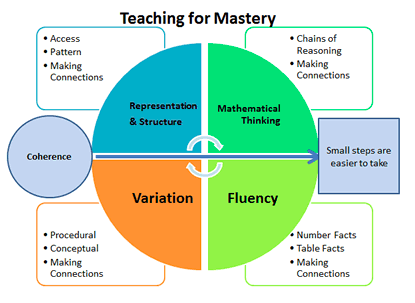
We believe that every child can develop a secure understanding of mathematics with effective teaching, sufficient practice and the right support. Our mastery approach builds learning in small, connected steps, giving children time to explore concepts, recognise relationships and explain their thinking.
We encourage children to be curious, persevere with challenges and see mistakes as opportunities to learn. We want them to develop the confidence to try an approach, discuss their ideas and make thoughtful decisions about how to solve a problem.
How we teach mathematics
Mathematics is taught daily, using the National Centre for Excellence in the Teaching of Mathematics (NCETM) materials as a basis for planning. These break learning into carefully sequenced steps so that new knowledge builds on secure foundations.
The NCETM spines support teaching in number, addition and subtraction, multiplication and division, and fractions. Learning in measurement, geometry and statistics provides further opportunities to develop and apply mathematical understanding.
Lessons include teacher modelling, guided practice and independent learning. Teachers select examples carefully to help children notice patterns, make connections and understand the structure behind the mathematics.
Practical resources, pictures and symbols are used together to develop understanding. Children might explore an idea using objects, represent it in a drawing and connect this to a written calculation. These approaches remain useful throughout school whenever they help children understand or explain a concept.
Mathematical talk is an important part of lessons. Teachers model accurate vocabulary and encourage children to explain their methods, justify answers and consider different approaches.
Building knowledge across ages and stages
In Reception, children develop early number sense through practical exploration, discussion and regular practice. They build an understanding of numbers, quantities and relationships, supported by 15-minute Mastering Number sessions. These foundations help them move beyond counting towards recognising and explaining how numbers work.
In Years 1 and 2, children strengthen their understanding of number and calculation. Practical resources and visual representations help them connect quantities, number facts and written methods. Mastering Number sessions continue to develop fluency and confidence, while children learn to explain their thinking and apply their knowledge to problems.
In Years 3 and 4, children build on these foundations as they work with larger numbers, develop multiplication and division knowledge and deepen their understanding of fractions. They make connections between facts and methods and apply their learning through measurement, geometry and statistics. A daily 15-minute morning maths session provides additional practice to help important knowledge and methods become secure.
In Years 5 and 6, children draw on their growing knowledge to tackle increasingly demanding calculations and problems. They develop greater independence in selecting methods, explaining their reasoning and checking whether an answer is sensible. Continued practice supports fluency, allowing them to concentrate on the decisions needed to solve more complex problems.
Across our mixed-age classes, teaching takes account of children’s starting points and the knowledge they need for their next steps. Children who are ready for further challenge deepen their understanding through reasoning, connections and application.
Practice and support
Regular practice helps children recall important knowledge accurately and efficiently. Counting, number facts and multiplication tables are revisited so that children can use them confidently in new learning.
Teachers check understanding throughout lessons and respond when children need further explanation or practice. Where a child has not understood a concept, additional teaching is provided that day or the following morning wherever possible. If a wider group needs more time, teachers adapt their planning before moving on.
Support is designed to help children understand the mathematics and become increasingly independent. Resources, modelling and carefully chosen steps make learning accessible while maintaining high expectations.
Developing confident mathematicians
Short quizzes before and after units help teachers identify starting points and check what children have learned. Termly assessments provide further information about what children remember and how well they apply their knowledge in different contexts.
Alongside assessment, teachers listen to children’s explanations and look closely at their work to understand their thinking. This helps us identify misconceptions, plan further teaching and support progress from each child’s starting point.
By the end of Year 6, we want children to have secure mathematical foundations, confidence in explaining their ideas and the ability to use their knowledge flexibly. Our aim is for them to approach secondary mathematics and everyday mathematical challenges with understanding, independence and a willingness to persevere.